Saylí Navarro Álvarez: Cuban Political Prisoner and Human Rights Defender
Saylí Navarro Álvarez: A Life of Courage, Dignity, and Peaceful Resistance in Cuba
By Michael Lima | DEMOCRATIC SPACES |November 3, 2026
Democratic Spaces honors the life and courageous activism of Saylí Navarro Álvarez, a Cuban prisoner of conscience and pro-democracy leader who is suffering from health problems without adequate medical care at La Bellotex women’s prison in Matanzas. Saylí is among the 152 women political prisoners held in Cuba, out of a total of 1,351 political prisoners nationwide.
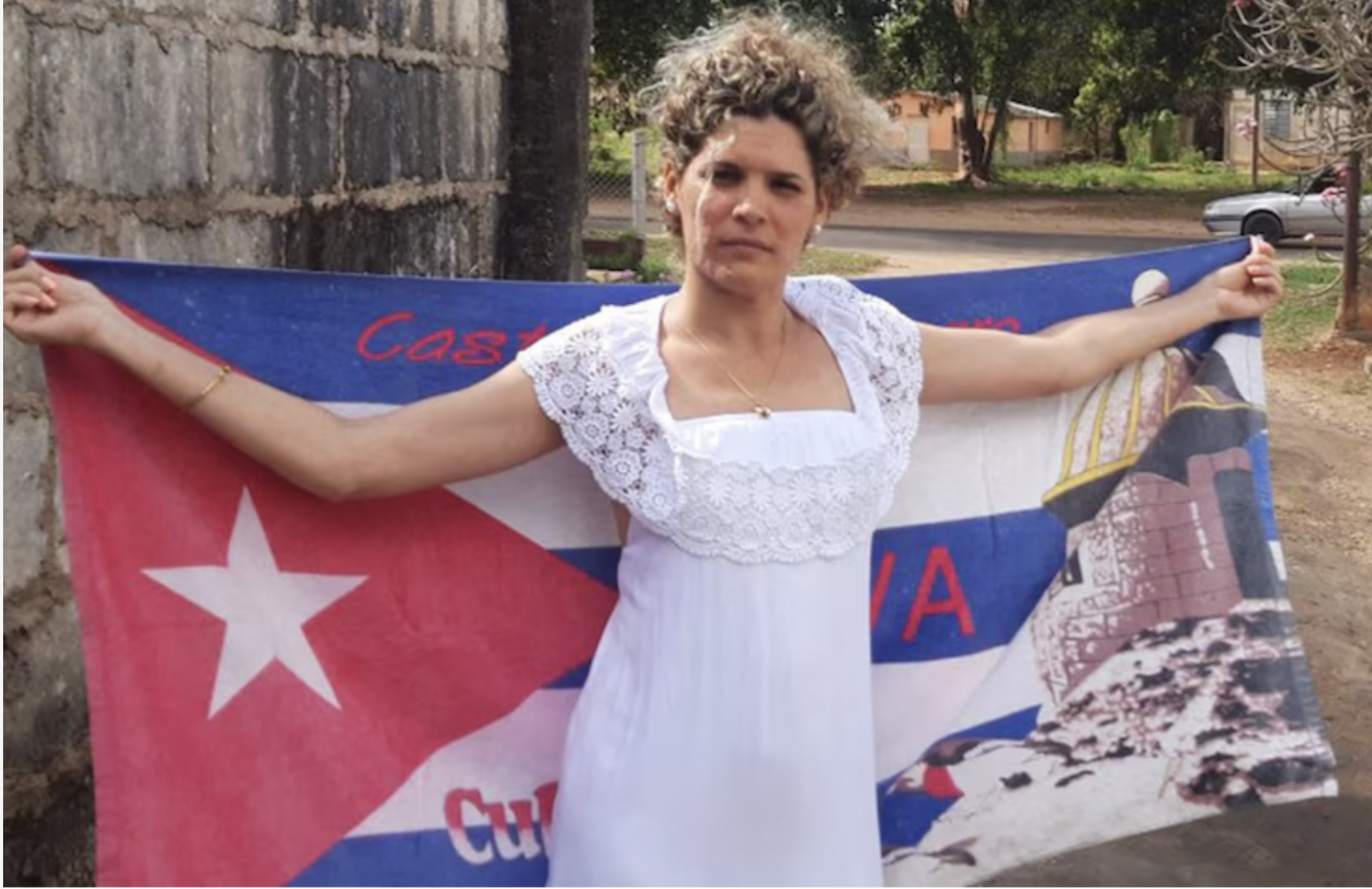
Saylí Navarro holding a Cuban flag. Photo: Infobae
Saylí Navarro Álvarez, a prisoner of conscience, member of the Ladies in White, independent journalist and activist with the Pedro Luis Boitel Party for Democracy, embodies courage, dignity, and an unwavering commitment to the ideal of a peaceful struggle for democracy in Cuba, paying an extraordinarily high human price in the process.
Her struggle began when, at just 17 years old, she became an independent journalist, exposing the arbitrary actions of the Cuban political system to the world. She also helped found her father's political organization, the Pedro Luis Boitel Party for Democracy led by Félix Navarro, and subsequently joined the Ladies in White, where she played a key leadership role in her hometown of Perico and throughout Matanzas province. She was also instrumental in organizing workshops to train members of the Ladies in White in civil society, democracy, and activism. As a member of the organization, she took part in countless marches in Havana and her hometown of Perico, demanding the release of all political prisoners, a central objective of her activism. The Ladies in White's marches, with gladioli in hand as they made their way to church for a Mass dedicated to political prisoners, became, through their public visibility, a means of encouraging activism and awakening support among the Cuban people.
Just as China has the iconic image of Tank Man, who stood before a column of tanks following the 1989 Tiananmen Square massacre, Cubans have an iconic photograph of Saylí Navarro. The image captures her during an arrest by agents of the Ministry of the Interior in 2013. Although under arrest, Saylí walks with her head held high and a determined expression, reflecting convictions that have inspired a new generation of activists to continue the nonviolent struggle for democracy.
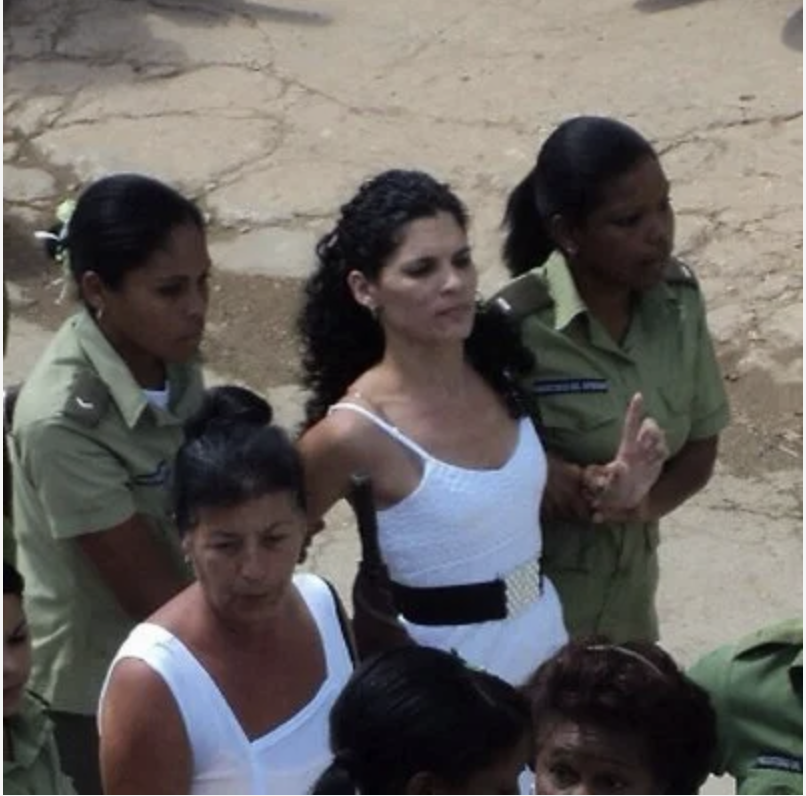
Arrest of Saylí Navarro. Matanzas, Cuba. 2013.
From adolescence, Saylí experienced firsthand the consequences of speaking out in defense of her ideals through the imprisonment of her father, fellow opposition leader Félix Navarro, who was a prisoner of conscience during Cuba's Black Spring crackdown and remained incarcerated from 2003 to 2011. She was expelled from the University of Matanzas, where she was studying law, in retaliation for exercising her right to receive training as an independent journalist at a civil society workshop held at the United States Interests Section in Havana. Her experience stands as a living contradiction of the myths underpinning the Cuban system, particularly the claim that education is a social right, when in reality the system excludes those who disagree with Communist Party policies and turns education into an instrument of indoctrination.
Moreover, as an activist confronting one of the longest-standing dictatorships of our time, she has seen her personal aspirations disrupted by harassment from State Security. Its agents intimidated her boyfriend during her high school years, ultimately causing their relationship to end. This episode illustrates how, in Cuba, the costs of repression are borne not only by activists themselves but also by their friends and romantic partners.
Following her initial detention in July 2021, Saylí was sentenced on March 2, 2022, to eight years in prison. Her father, Félix Navarro, was also sentenced to nine years. Both were arrested on July 12, 2021, when they went to a police station to inquire about the whereabouts of activists from the Pedro Luis Boitel Party for Democracy who had been detained following the July 11 protests. Saylí was convicted of the offenses of "assault," "contempt," "disobedience," and "public disorder," provisions of Cuba's Penal Code whose application against peaceful demonstrators and dissidents has been denounced by human rights organizations as a means of criminalizing dissent and justifying repression. Amnesty International designated Saylí and her father prisoners of conscience, concluding that they had been imprisoned solely for peacefully exercising their fundamental rights.
Sept 30, 2022. Sonia Álvarez mother of political prisoner Sayli Navarro denounces psychological torture/mistreatment/harassment of her daughter who has only been allowed to call her father Félix Navarro twice in 5 months held in prison while other prisoners are allowed calls twice a month.
In prison, Saylí places her ideals above even her physical well-being, demonstrating that, even under the most adverse conditions, her spirit has not been broken by prison bars. Not even imprisonment or threats from her jailers have silenced her voice. In 2022, she denounced the sham proceedings that led to her conviction and that of her father, Félix Navarro, including the charges brought against them and the violations of due process in their judicial cases. In retaliation, prison authorities suspended her telephone privileges for 15 days, preventing her from communicating with her mother, and threatened to transfer her to a prison in Guantánamo, at the easternmost end of the island. Such a transfer would have imposed an enormous financial burden on her mother, Sonia Álvarez, making prison visits considerably more difficult.
In July 2023, she undertook a fast inside La Bellotex prison to commemorate the July 11, 2021 protests. Prison authorities classified this legitimate exercise of freedom of expression, a fundamental human right, as a disciplinary infraction and delayed her eligibility for a less restrictive prison regime by six months. In April 2026, during a telephone conversation with activist Iván Hernández Carrillo, Saylí denounced the beating her father had suffered at Agüica prison. As a consequence, her sentence reduction for good behavior was cut from 60 to 30 days.
Human rights organizations, including CUBADECIDE, have documented that both Saylí and her father, Félix Navarro, refused to accept exile in exchange for their release from prison. The proposal was conveyed to them in 2026 by the auxiliary bishop of Havana, Eloy Ricardo Domínguez Martínez. By rejecting this arrangement, they reaffirmed their right to live in their own country and continue the struggle for democracy from within Cuba.
Saylí Navarro, Cuban Prisoner of Conscience sends a loud and clear message that she will not leave Cuba. Saylí Navarro dice alto y claro en un mensaje desde prision que no abandonara Cuba. Ni ella ni Félix Navarro abandonarán el país. March 18. 2023. Message from the Mixed Women's Prison of Matanzas.
Saylí endures cruel, inhuman, and degrading conditions at La Bellotex prison, where she has been forced to sleep on the floor because the prison mattresses are infested with bedbugs. She has also faced reprisals that include the denial of adequate medical care for her gastrointestinal problems and hypertension.
I had the honor of exchanging ideas with Saylí and came to appreciate that her vision of the struggle for democracy extends far beyond Cuba's borders. Beginning in April 2018, she expressed solidarity with the students and young people of Nicaragua who raised their voices for an inclusive, democratic country free from tyranny, and who paid a devastating price through imprisonment, persecution, and killings. She also consistently supported Venezuela's democratic movement through its numerous demonstrations and its struggle for democracy, reaffirming the universal character she attributes to her own cause. Her vision unites Cuban democrats with Nicaraguans, Venezuelans, and all those who, in every corner of the world, pursue freedom through nonviolent means in the face of oppression and tyranny.
Saylí Navarro risks her life under conditions of imprisonment that threaten her health and physical integrity. She has devoted her life to the peaceful struggle for democracy in Cuba. She is a living testament to the greatness of spirit of those who keep the flame of democracy alive despite the immense human cost of doing so. Through her resistance to oppression, communism, and totalitarianism, she embodies the ideal of human dignity expressed by José Martí in 1889, whose words we may adapt as follows: "When many people are without dignity, there are always others who carry within themselves the dignity of many."
Saylí Navarro Álvarez: Una vida de valentía, dignidad y resistencia pacífica en Cuba
Saylí Navarro Álvarez, prisionera de conciencia, periodista independiente, Dama de Blanco y activista del Partido Pedro Luis Boitel por la Democracia, encarna la valentía, la dignidad y el compromiso inquebrantable con el ideal de la lucha pacífica por la democracia en Cuba, una causa por la que ha pagado un altísimo costo humano.
Su lucha comenzó cuando, con apenas 17 años, se convirtió en periodista independiente, comunicando al mundo las arbitrariedades del sistema. Además, ayudó a fundar el partido de su padre (Félix Navarro), el Partido por la Democracia Pedro Luis Boitel, y posteriormente se incorporó a las Damas de Blanco, donde desempeñó un papel clave como líder del movimiento en su pueblo de Perico y en la provincia de Matanzas. También fue fundamental en la organización de talleres para capacitar a las Damas de Blanco en temas de sociedad civil, democracia y activismo. Como integrante de esta organización, fue protagonista de incontables marchas en La Habana y en su pueblo de Perico, exigiendo la liberación de todos los presos políticos, objetivo central en el que ha enfocado su activismo. Las marchas de las Damas de Blanco, con gladiolos en la mano y rumbo a la iglesia para culminar con una misa por los presos políticos, se convirtieron, por su carácter público, en una forma de fomentar el activismo y despertar el apoyo del pueblo cubano.
Si en China existe la icónica imagen del hombre del tanque, que se plantó frente a una columna de tanques tras la masacre de la plaza de Tiananmén en 1989, los cubanos tenemos la icónica fotografía de Saylí Navarro. La imagen la muestra durante un arresto en 2013 por agentes del Ministerio del Interior. Saylí aparece detenida, pero camina con la cabeza erguida y el rostro decidido, reflejando unas convicciones que han servido de inspiración a una nueva generación de activistas para continuar la lucha no violenta por la democracia.
Desde adolescente, Saylí experimentó de primera mano las consecuencias de alzar la voz en defensa de un ideal, al sufrir el encarcelamiento de su padre, el también líder opositor Félix Navarro, quien fue preso de conciencia de la Primavera Negra entre 2003 y 2011. Fue expulsada de la Universidad de Matanzas, donde cursaba la carrera de Derecho, en represalia por ejercer su derecho a capacitarse como periodista independiente en un taller para la sociedad civil impartido en la Oficina de Intereses de Estados Unidos. Es un ejemplo viviente que contradice los mitos que sustentan al sistema cubano, especialmente el de que la educación es un derecho social, cuando en realidad excluye a quienes discrepan de las políticas del Partido Comunista y se convierte en un instrumento de adoctrinamiento.
Interview with Saylí Navarro. May 13, 2014. Interviewed by Julio Estorino.
Además, como activista frente a una de las dictaduras más longevas de nuestra era, ha visto truncados sus proyectos personales por el acoso de la Seguridad del Estado, cuyos agentes intimidaron a su novio de la etapa preuniversitaria, lo que provocó el fin de su relación sentimental. Este episodio ilustra cómo en Cuba no solo los activistas pagan el costo de la represión, sino también su entorno de amistades y parejas sentimentales.
Tras su detención inicial en julio de 2021, Saylí fue condenada el 2 de marzo de 2022 a ocho años de prisión. Su padre, Félix Navarro, también fue condenado a nueve años de prisión. Ambos fueron detenidos el 12 de julio de 2021, cuando acudieron a una estación de policía para indagar por el paradero de activistas del Partido por la Democracia Pedro Luis Boitel, arrestados tras las protestas del 11 de julio. Saylí fue condenada por los delitos de «atentado», «desacato», «desobediencia» y «desórdenes públicos», figuras del Código Penal cubano cuya aplicación contra manifestantes pacíficos y disidentes ha sido denunciada por organizaciones de derechos humanos como un instrumento para criminalizar el disenso y justificar la represión. Amnistía Internacional declaró a Saylí y a su padre presos de conciencia, al considerar que fueron encarcelados únicamente por ejercer pacíficamente sus derechos fundamentales.
En prisión, Saylí antepone sus ideales incluso a su integridad física, demostrando que, aun en las condiciones más adversas, su espíritu no ha sido quebrantado por los barrotes de la cárcel. Ni siquiera en prisión su voz ha sido silenciada por las amenazas de sus carceleros. En 2022 denunció la farsa que representaron su juicio y los cargos formulados contra ella y su padre, Félix Navarro, así como las violaciones del debido proceso en la causa judicial de ambos. Como represalia, las autoridades penitenciarias le suspendieron durante 15 días el acceso al teléfono para comunicarse con su madre y la amenazaron con trasladarla a una prisión en Guantánamo, en el extremo oriental de la isla, lo que habría supuesto un costo altísimo para las visitas de su madre, Sonia Álvarez.
En julio de 2023 realizó un ayuno dentro de la prisión La Bellotex para recordar las protestas del 11 de julio de 2021. Como consecuencia, las autoridades penitenciarias calificaron este acto legítimo de ejercicio de la libertad de expresión, un derecho humano fundamental, como una indisciplina y retrasaron seis meses su acceso a un régimen penitenciario de menor severidad. En abril de 2026, Saylí denunció, durante una llamada telefónica con el activista Iván Hernández Carrillo, la golpiza que sufrió su padre en la prisión de Agüica, lo que tuvo como consecuencia que su rebaja de condena por buena conducta se redujera de 60 a 30 días.
Organizaciones de derechos humanos, entre ellas Cuba Decide, han documentado que tanto ella como su padre, Félix Navarro, se han negado a aceptar el exilio a cambio de su excarcelación, propuesta que les fue comunicada en 2026 por el obispo auxiliar de La Habana, Eloy Ricardo Domínguez Martínez. Con esta decisión, reafirman su derecho a vivir en su propio país y luchar desde dentro por la democracia.
Saylí sobrevive en la prisión de La Bellotex en condiciones crueles, inhumanas y degradantes, teniendo que dormir en el suelo porque los colchones del penal están infestados de chinches. Además, ha sufrido represalias que incluyen la negación de atención médica adecuada para sus problemas gastrointestinales y de hipertensión.
Tuve el honor de compartir ideas con Saylí y pude percibir que su horizonte de lucha democrática trasciende las fronteras de Cuba. Se solidarizó desde abril de 2018 con los estudiantes y jóvenes de Nicaragua que alzaron su voz por un país inclusivo, democrático y libre de tiranías, y pagaron el alto costo de ser encarcelados, perseguidos y asesinados. Además, siempre apoyó al movimiento democrático de Venezuela en sus numerosas marchas y en su lucha por la democracia, ratificando con ello el carácter universal que atribuye a su propia lucha, que une a los demócratas cubanos con los nicaragüenses, venezolanos y todos aquellos que, en cualquier rincón del planeta, luchan mediante métodos no violentos por el triunfo de la libertad frente a la opresión y la tiranía.
Saylí Navarro arriesga su vida en condiciones de reclusión que amenazan su salud e integridad física. Ha dedicado su vida a la lucha pacífica por la democracia en Cuba. Es una demostración viviente de la grandeza de espíritu de quienes mantienen viva la llama de la democracia a pesar del altísimo costo humano que ello representa. Con su resistencia frente a la opresión, al comunismo y al totalitarismo, encarna el ideal de dignidad humana expresado por José Martí en 1889, cuyas palabras podemos adaptar así: «Cuando hay muchas personas sin decoro, siempre hay otras que llevan en sí la dignidad de muchas».