Making Them Visible: The Wednesday Twitter Storm for Cuba’s Political Prisoners
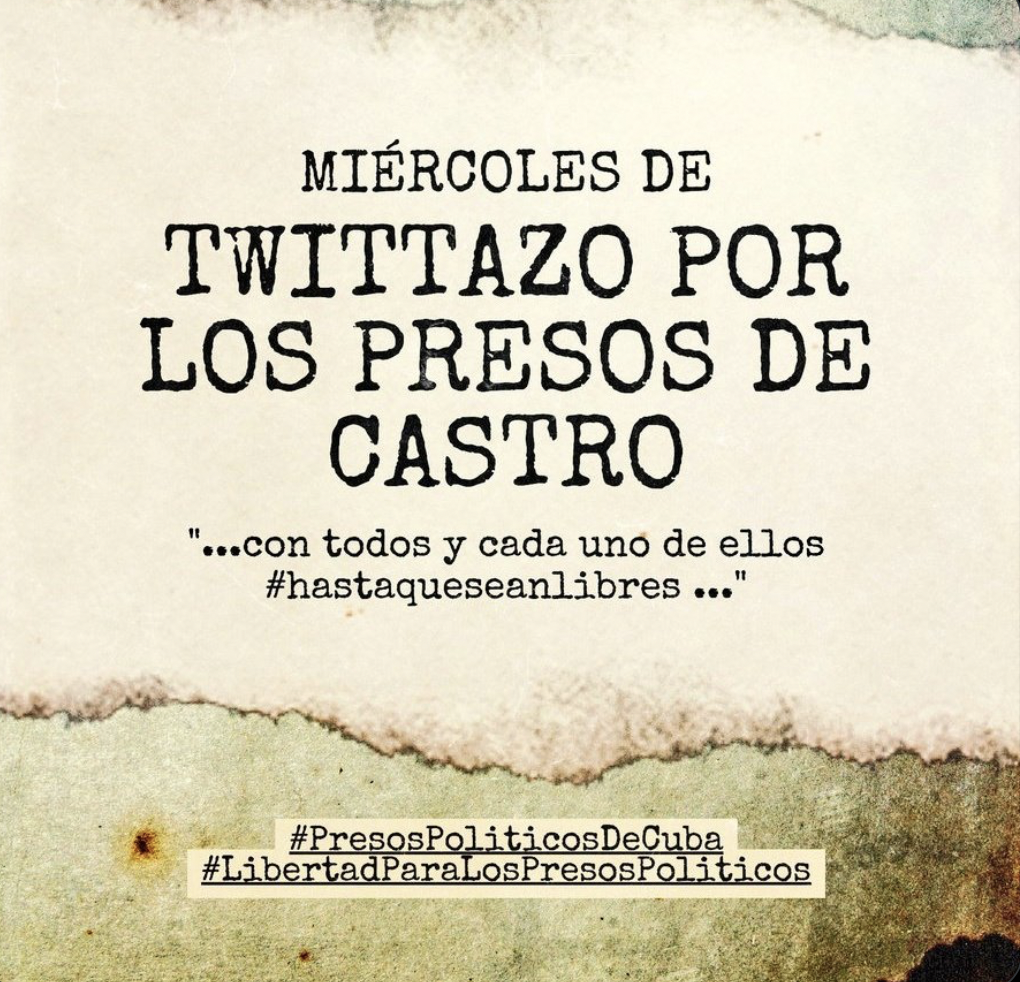
The graphic reads: “Wednesday’s Twitter Storm for Castro’s Prisoners. With each and every one of them. #UntilTheyAreFree #CubanPoliticalPrisoners #FreedomForPoliticalPrisoners” Via Betty Guerra Perdomo
By Michael Lima | DEMOCRATIC SPACES | September 30, 2026.
At Democratic Spaces, we consider political imprisonment in Cuba one of the country’s gravest humanitarian tragedies, affecting not only those behind bars but thousands of Cuban families. One of our priorities is therefore to use the means available to us as a civil society organization to support the cause of the immediate and unconditional release of all Cuban political prisoners.
We also recognize the perseverance and commitment of human rights and pro-democracy activists such as Betty Guerra Perdomo, along with a large group of Cubans around the world who have mobilized on X, formerly Twitter, to tell the stories of Cuba’s political prisoners.
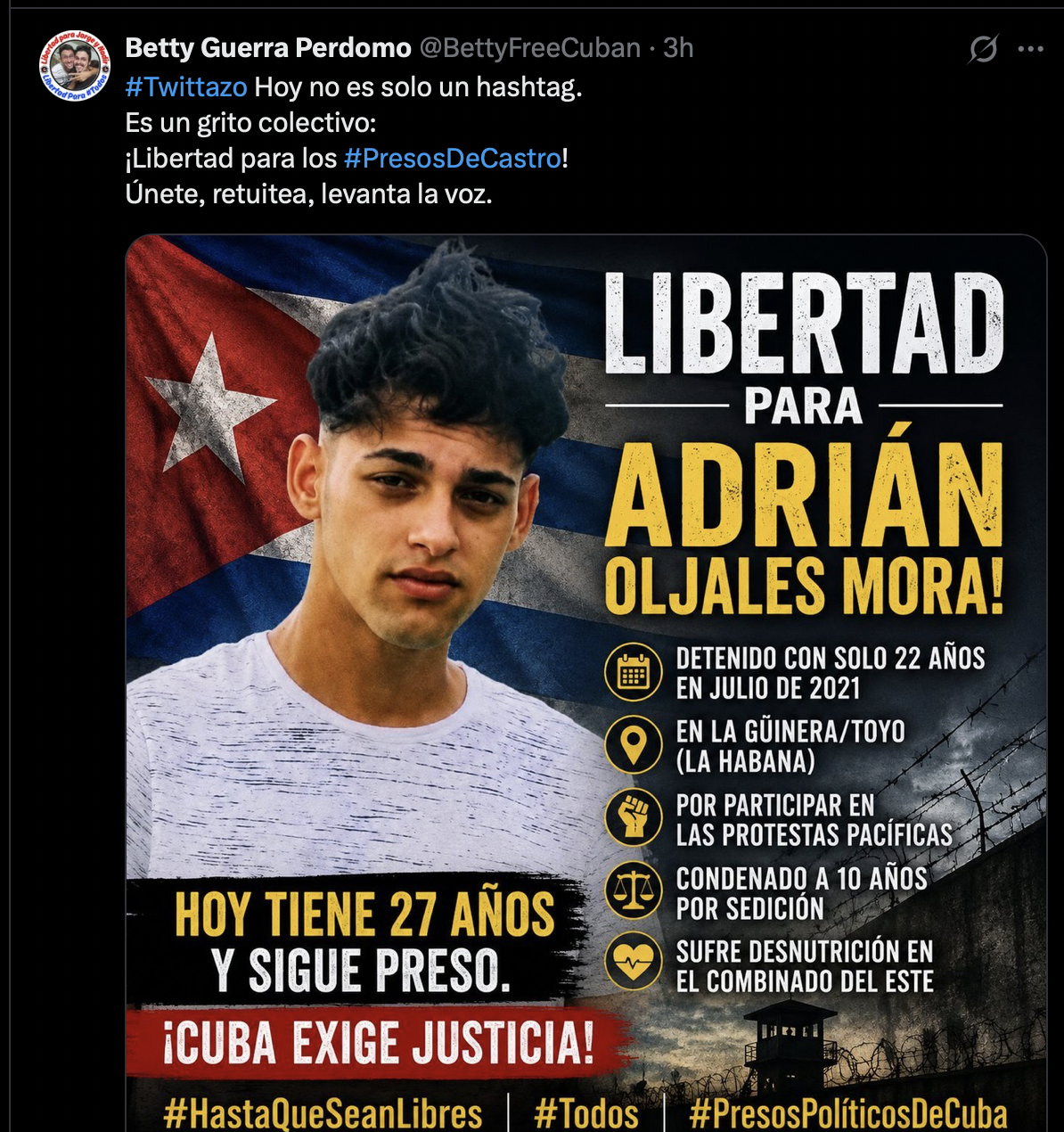
The graphic reads: “Freedom for Adrián Ojales Mora, 27 years old, detained in July 2021 for participating in the nonviolent protests of July 11 that year and sentenced to 10 years in prison for sedition. He is imprisoned at Combinado del Este and suffers from malnutrition. Cuba demands justice.”
the Wednesday Twitter Storm for Cuba’s Political Prisoners
Although their advocacy for political prisoners continues every day, Wednesdays have taken on particular importance. Activists dedicate the day to a coordinated Twitter storm, or Twitazo, using hashtags such as #Twitazo, #PresosdeCastro, #HastaQueSeanLibres, and #LibertadParaJorgeYNadir. You can follow them on their X accounts: Betty Guerra Perdomo and Presos Politicos de Cuba
Their philosophy is simple but powerful: to make visible is to protect.
Through the dynamic use of photographs and graphics, activists put a human face behind every case and tell the stories of political prisoners who might otherwise remain unknown beyond their families and communities. Their posts denounce allegations of denial of medical care, prolonged isolation, beatings, restrictions on family visits, psychological abuse, and other forms of cruel, inhuman, or degrading treatment.
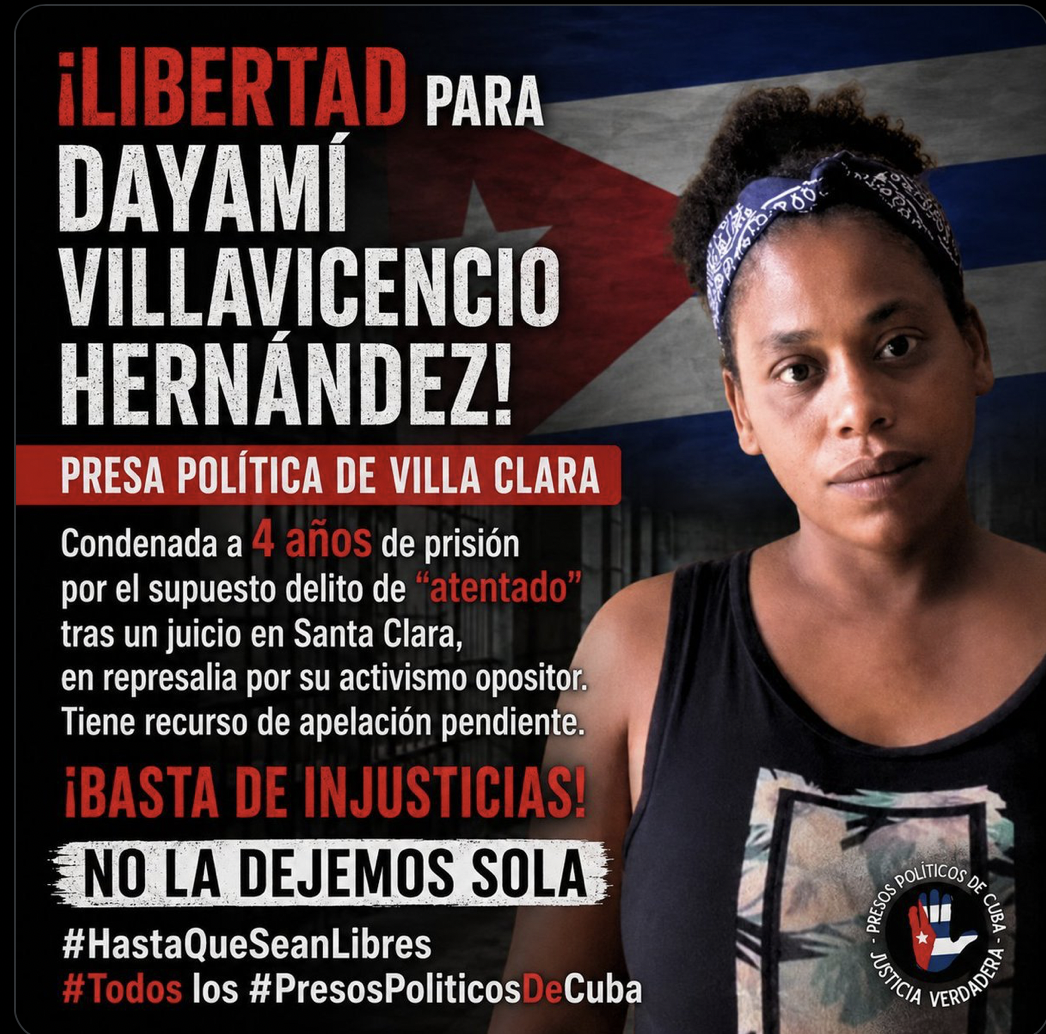
The graphic reads: “Freedom for Dayamí Villavicencio Hernández, a political prisoner from Villa Clara, sentenced to four years in prison for the alleged crime of ‘assault’ following a trial in Santa Clara, in retaliation for her opposition activism. Her appeal is pending. Let us not leave her alone. Enough injustice.”
A review of the #Twitazo campaign over the years reveals the stories of a large number of Cuban political prisoners, ranging from internationally recognized dissidents to prisoners whose names have received little attention outside Cuba. The objective is the same in every case: to transform a name on a list into the story of a human being.
Jorge and Nadir Martín Perdomo
For Betty Guerra Perdomo, this cause is also deeply personal. She is the cousin of Cuban political prisoners Jorge Martín Perdomo and Nadir Martín Perdomo, two brothers imprisoned following their participation in the July 11, 2021 protests in San José de las Lajas, Mayabeque.
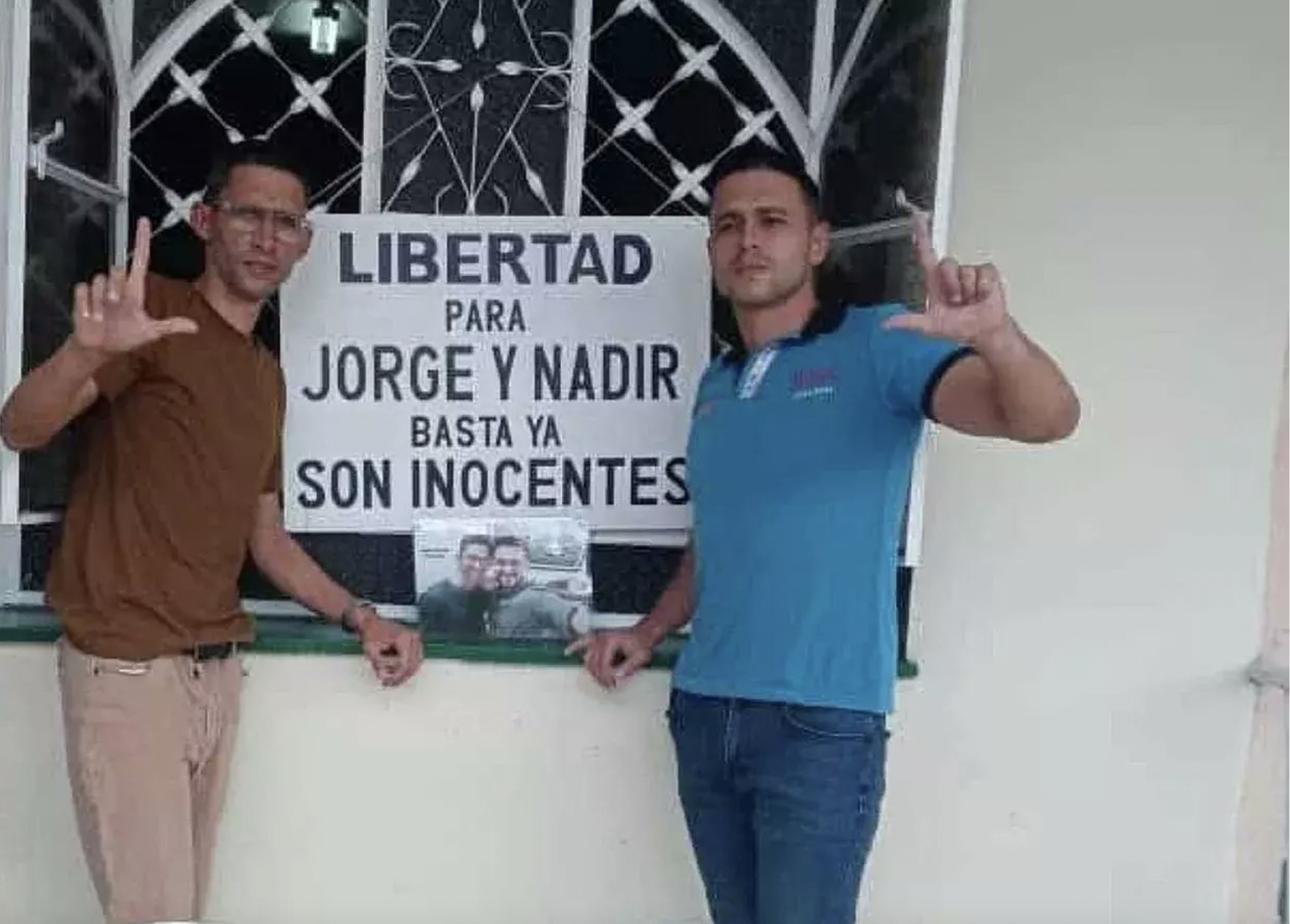
Photo of brothers Jorge and Nadir Perdomo from September 2023, when—after 794 consecutive days in prison—they were temporarily released for a few days. The sign calls for freedom for both.
Jorge Martín Perdomo was sentenced to eight years of imprisonment, while Nadir Martín Perdomo was sentenced to six. They were prosecuted on charges that included “public disorder,” “contempt,” and “assault.” Their case has since received significant international recognition. In Opinion No. 66/2024, the United Nations Working Group on Arbitrary Detention concluded that the deprivation of liberty of both brothers was arbitrary and violated numerous provisions of the Universal Declaration of Human Rights.
Jorge has been held at the Ho Chi Minh correctional labour camp in Mayabeque, where his family and human rights organizations have reported restrictions on communication and family contact, inadequate medical attention, isolation, and other forms of mistreatment. His mother, Marta Perdomo, has also denounced the prohibition on keeping books as another form of punishment imposed on her son.
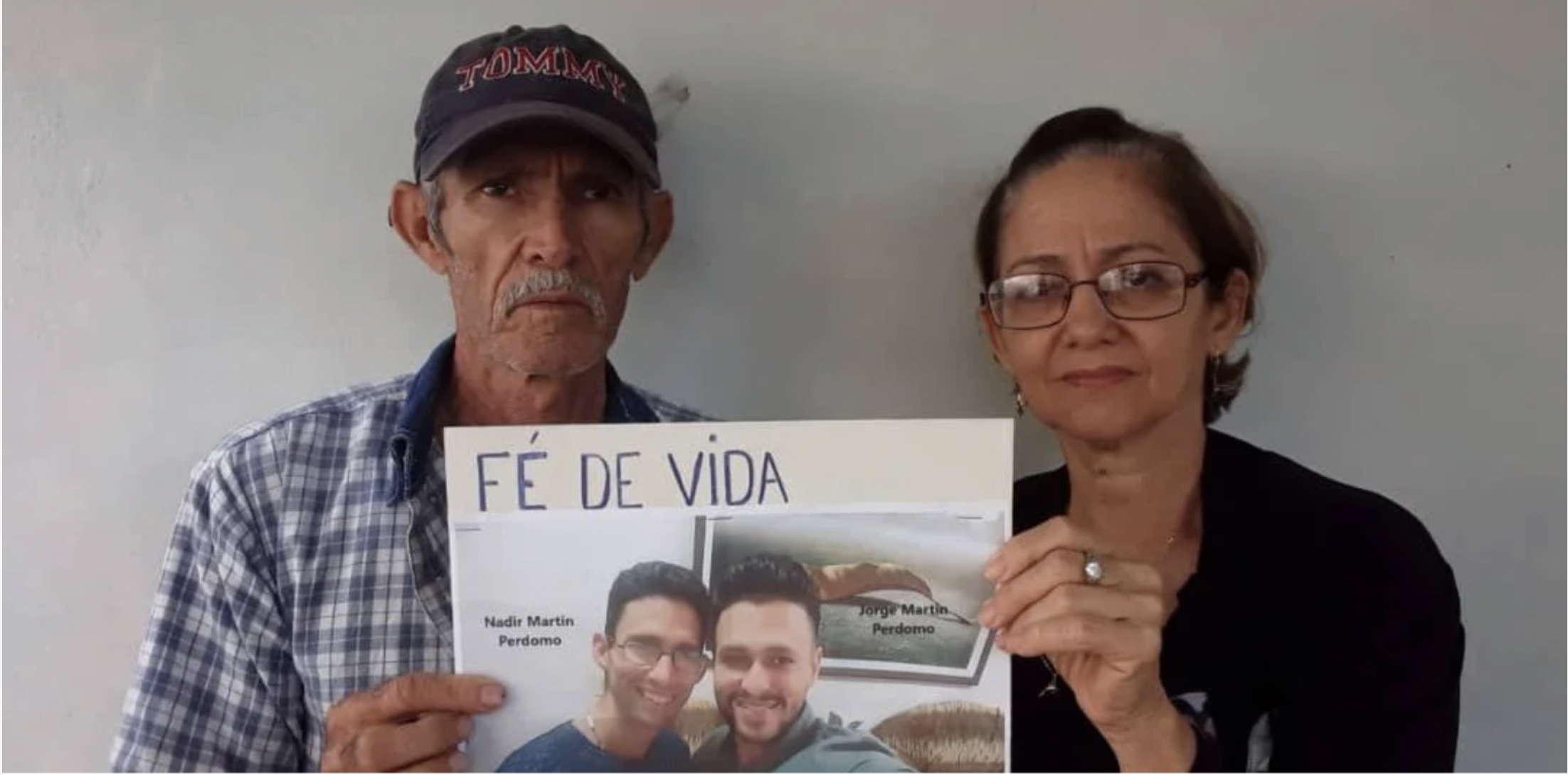
Parents of Jorge and Nadir Perdomo demand proof of life after Jorge was held incommunicado for more than 20 days. March 10, 2025. Via CubaNet.
The separation of the brothers has itself caused additional hardship for the family. Reports have documented restrictions preventing them from communicating with one another and, on at least one occasion, authorities prevented Nadir from visiting Jorge even while Nadir was temporarily outside prison on a pass.
In March 2025, after Jorge had reportedly been held incommunicado for more than 20 days, his parents went to the Communist Party headquarters in San José de las Lajas to demand information about their son and proof that he was alive. Jorge subsequently managed to communicate with his family.
The experiences of Jorge and Nadir have also appeared in research documenting patterns of alleged torture and ill-treatment of Cuban political prisoners. In a 2023 study by Prisoners Defenders, Nadir was documented as having experienced 12 of the 15 categories of torture or ill-treatment examined by the organization, while Jorge was documented in 11 categories. These findings represent documented allegations collected by the organization and should not be interpreted as judicial findings against individual prison officials.
Democratic Spaces nominated the Perdomo brothers for the Graciela Fernández Meijide Human Rights Award
On April 22, 2025, Democratic Spaces nominated the Perdomo brothers for the Graciela Fernández Meijide Human Rights Award in recognition of their imprisonment following the July 11 protests.
“They embody the courage of ordinary citizens who dared to break the wall of fear to demand freedom and dignity for all Cubans,” said Michael Lima, Director of Democratic Spaces. “Awarding them this recognition would be an act of justice and a message to authoritarian regimes: the international community stands with those who defend human rights.”
Behind Every Number Is a Human Being
The importance of initiatives such as the Wednesday #Twitazo becomes even clearer when viewed against the scale of political imprisonment in Cuba.
According to Prisoners Defenders, 1,339 political prisoners and people subjected to politically motivated restrictions on their liberty were on its list as of August 31, 2026. The organization reported that 155 were women, while 38 people on the current list had been detained when they were minors, 14 of whom remained incarcerated. Prisoners Defenders also reported 281 new political-prisoner cases added during the 12 months from September 2025 through August 2026.
The medical situation is particularly concerning. Among political prisoners who remained incarcerated, Prisoners Defenders documented 463 people with serious medical conditions and 54 prisoners with severe mental-health disorders, reporting inadequate access to appropriate medical or psychiatric treatment in many of these cases.
These concerns extend beyond individual NGO reports. On June 26, 2026, the Inter-American Commission on Human Rights warned of the ongoing use of torture and other forms of ill-treatment against people detained for political reasons in Cuba. The Commission cited reports involving physical assault, sexual violence, solitary confinement, psychological torture, and death threats. It also highlighted inadequate access to drinking water, food, specialized medical care, sanitary conditions, family visits, and correspondence.
Earlier research by Prisoners Defenders illustrates the severity of these allegations. In a detailed study of 168 fully coded political-prisoner cases, 141 reported deprivation of communication with family members or legal counsel, 127 humiliation or degrading treatment, 122 denial of adequate medical care, 114 physical assault, and 102 prolonged solitary confinement or punitive isolation. The study documented 15 recurring patterns of alleged torture or ill-treatment. These findings relate to the organization’s documented sample and should not be interpreted as prevalence estimates for Cuba’s entire prison population.
These numbers explain why visibility matters.
Behind 1,339 political-prisoner cases are 1,339 individual stories, along with parents, children, spouses, siblings, and friends living with the consequences of imprisonment. A statistic can describe the magnitude of repression, but a photograph, a name, and a personal story can remind the world of the human being behind the number.
That is the purpose of the Wednesday #Twitazo.
Democratic Spaces encourages people committed to human rights around the world to support this initiative every Wednesday by following, sharing, and amplifying the stories published under #Twitazo, #HastaQueSeanLibres, #PresosPoliticosdeCuba, #PresosdeCastro, and #LibertadParaJorgeYNadir.
To make them visible is to protect them. To tell their stories is to ensure they are not forgotten.
SOURCES
Lima, Michael. “Democratic Spaces Nominates Cuban Political Prisoner Jorge Martín Perdomo for the Graciela Fernández Meijide Human Rights Award.” Democratic Spaces, April 22, 2025. https://democraticspaces.com/blog/2025/4/22/democratic-spaces-nominates-cuban-political-prisoner-jorge-martn-perdomo-for-the-graciela-fernndez-meijide-human-rights-award
Prisoners Defenders. First Comprehensive Study on Torture in Cuba: Quantitative, Qualitative and Statistically Representative Research on 181 Cases as a Sample of the 1,277 Civilian Political Prisoners Tortured in Prisons in the Last 12 Months. Report and complaint, May 30, 2023. https://victimsofcommunism.org/wp-content/uploads/2023/06/EN-Torture-in-Cuba-First-Comprehensive-Study-2023-Prisoners-Defenders-1.pdf
Prisoners Defenders. “Cuba alcanza un nuevo récord de 1.339 presos políticos: reclamar agua y luz lleva a prisión y castiga a familias enteras.” September 10, 2026. https://www.prisonersdefenders.org/2026/09/10/cuba-alcanza-un-nuevo-record-de-1-339-presos-politicos-reclamar-agua-y-luz-lleva-a-prision-y-castiga-a-familias-enteras/.