The Human Cost in Cuba of Speaking Out on Social Media
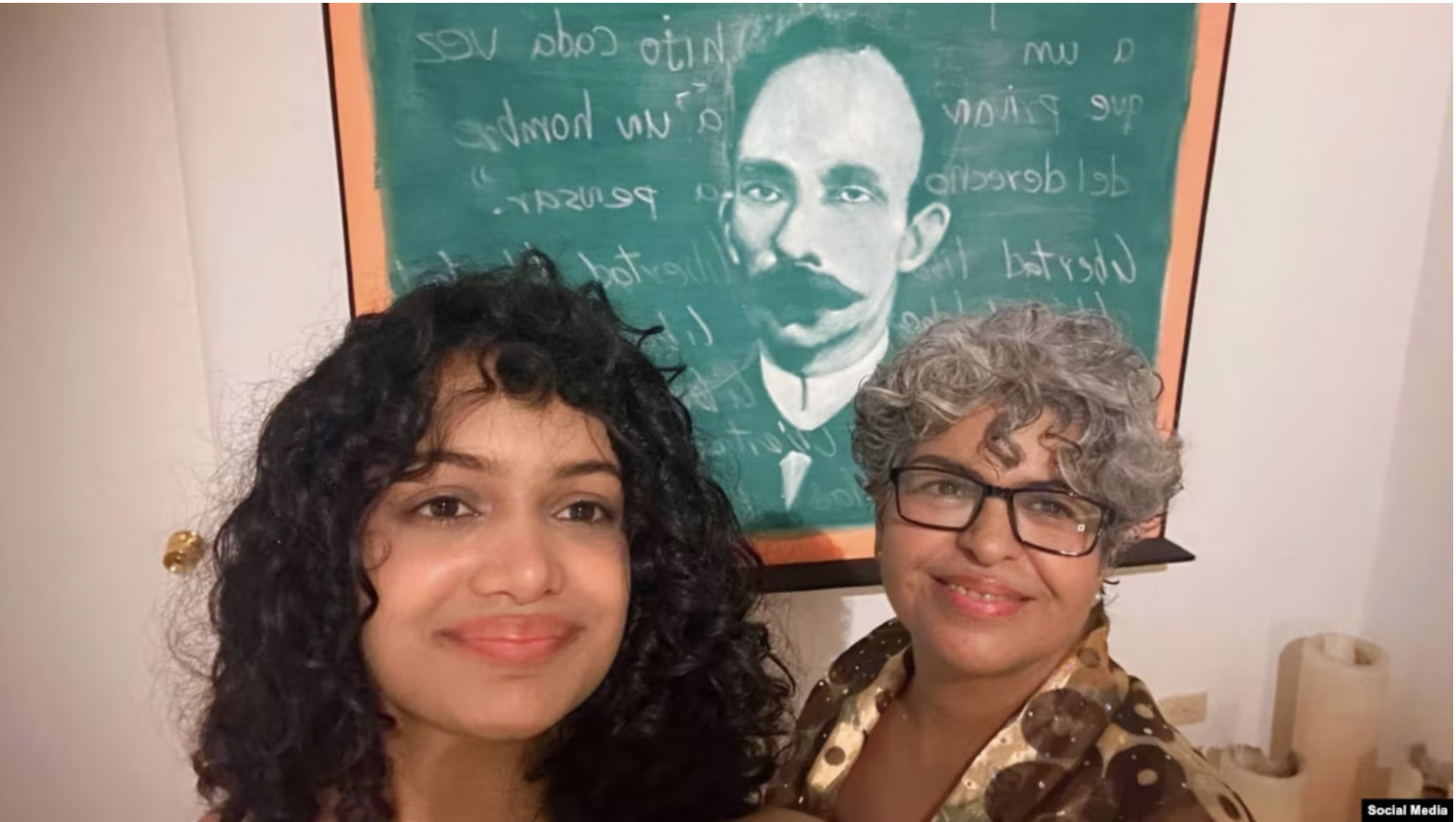
Anna Sofía Benítez [left] and her mother, Caridad Silvente [right]. Photo: Anna Bensi’s Facebook profile. Via Martí Noticias. Photo: Ana Benz’s Facebook profile. Via Martí Noticias
By Michael Lima | DEMOCRATIC SPACES | September 27 2026
HABANA - Anna Sofía Benítez is a young Christian Cuban influencer who has made creative and dynamic use of social media to criticize the Cuban regime. She has paid a heavy price for exercising her right to freedom of expression, having been summoned numerous times to police stations.
To document this police harassment, she and her mother, Caridad Silvente, decided to record an encounter on March 10, when a police officer came to their door to summon them to a police station. For recording the officer and showing his face on camera, both women were charged with a “crime against the personal privacy of a police member” and face a possible two year prison sentence. Since April 25, both have been under forced house arrest and prohibited from leaving the country. A trial was initially scheduled for September 17 but was subsequently postponed to a later date.
Their case is not isolated. In recent years, numerous Cubans have faced detention, prosecution or imprisonment after recording videos, livestreaming or posting criticism of the government on social media. In March 2024, Yerismar Velázquez Cruz posted a short video from the Sanctuary of the Virgin of Charity in El Cobre calling for freedom for Cuba and its political prisoners. She was arrested and spent almost ten months in detention before being released on bail pending trial. That same month, Asdrúbal Kindelán Garbey was detained after livestreaming outside a State Security facility while demanding the release of his son, while Liuber Caballero González was arrested after publishing images of a cacerolazo protesting shortages of water and electricity.
The pattern continued in 2025 and intensified in 2026. Alexander Mario Fábregas Milanés was sentenced to seven years in prison for “propaganda against the constitutional order” in a case connected to critical Facebook publications. Virgilio Mantilla Arango was arrested after publishing a video from a cemetery criticizing deterioration, shortages and government responsibility, with prosecutors reportedly seeking a ten year sentence. In February 2026, audiovisual content creators Ernesto Ricardo Medina and Kamil Zayas Pérez, known as El4tico, were arrested after producing social media content discussing and satirizing Cuba’s political, economic and social conditions. Authorities also seized computers, phones, cameras and recording equipment.
Other cases followed. Alexeis Serrano Águila was arrested in April after publishing a video criticizing conditions and denouncing police harassment. Javier Ernesto Martín Gutiérrez was detained after posting a video denouncing Cuba’s economic and social crisis. Erich Alain Chang Padrón was arrested in May following Facebook livestreams about blackouts, food losses, poverty and the government. In June, YouTuber Eduardo “Eddy” Ceballos Pérez was arrested after producing satirical videos about deteriorating infrastructure and publishing footage of an abandoned former military installation. In July, Lumey Guzmán Fernández was detained after broadcasting a Facebook Live video denouncing the electricity crisis following approximately 90 hours without power and criticizing senior government officials.
Anna Sofía nevertheless takes pride in exercising her right to freedom of expression. She recently stated: “If I were given the opportunity to turn back time, knowing all the repression I would face and everything I would lose, believe me, I would do it all over again. It has truly been liberating for me to finally express everything I had been holding inside.”
Under Cuba’s current legal framework, criticism expressed through social media can expose citizens to criminal prosecution under a range of provisions regulating expression, political dissent and online activity. The cases of Anna Sofía Benítez and Caridad Silvente therefore form part of a broader documented pattern in which Cubans have faced police harassment, detention, prosecution and imprisonment following videos, livestreams and social media posts critical of the government.
For more information, see the full article by Rolando Napoles, Trial of Cuban Influencer Anna Bensi and Her Mother Postponed (VIDEO)