El4tico: The Young Cuban Dissidents Facing Prison for Challenging the Regime
El4tico is an audiovisual project and part of a broader online movement encouraging independent thought IN CUBA. It has also functioned as an alternative forum for political discussion. According to its creators, Kamil Zayas and Ernesto Medina, “El4tico is not just a place. It is the real parliament of this country, and it is in permanent session.”
MICHAEL LIMA CUADRA
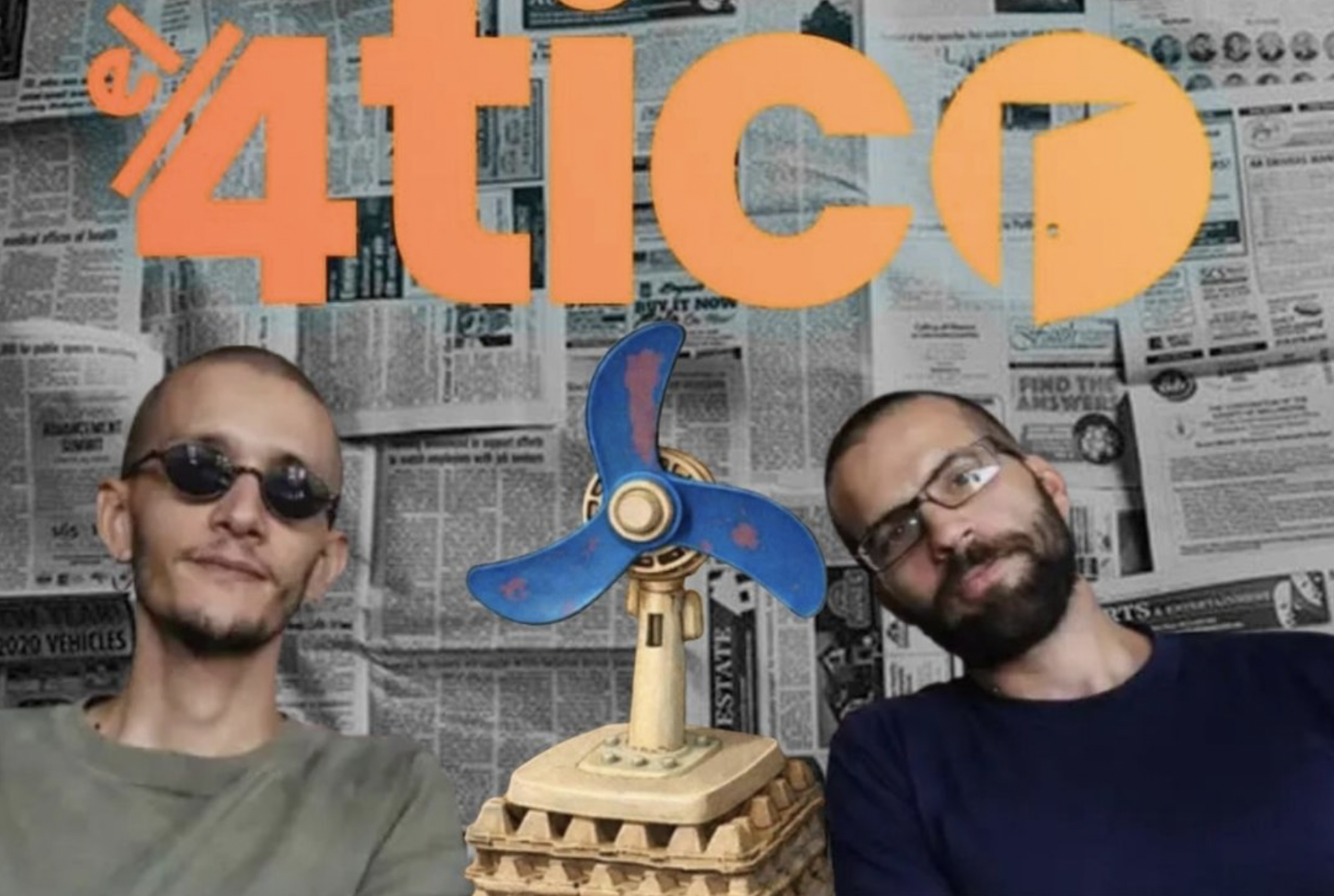
Kamil Zayas and Ernesto Medina creates of the audiovisual project El4tico. Photo: Árbol Invertido.
A dictatorship is a dictatorship.
There is no such thing as a “one-party democracy,” as former European Union High Representative Federica Mogherini characterized Cuba’s political system in 2016 in the EU’s 2016 Annual Report on Human Rights and Democracy in the World, or a “different democracy,” as Cuban Foreign Minister Bruno Rodríguez has described it in a May 2026 interview with ABC News. Such formulations do not change the fundamental nature of a system in which citizens cannot freely organize political parties, compete for political power, challenge those who govern them, or exercise freedom of expression without fear of repression. They are euphemisms that risk sanitizing dictatorship.
On February 6, 2026, Kamil Zayas Pérez and Ernesto Ricardo Medina, members of the independent audiovisual project El 4tico, were detained during a State Security operation in Holguín. They subsequently faced a battery of criminal charges, including Propaganda Against the Constitutional Order, Defamation of Institutions and Organizations and of Heroes and Martyrs, and Incitement to Commit a Crime. They face potential prison terms of ten and eight years, respectively. When applied to peaceful expression and dissent, such provisions are incompatible with international freedom-of-expression standards and have been used by the Cuban authorities to criminalize dissent. Their cases illustrate the risks faced by Cubans who use digital platforms to challenge the country’s political system from inside the island.
Human rights organizations such as Amnesty International have criticized provisions of the Cuban Criminal Code, including Article 124 on “propaganda against the constitutional order,” for using terminology that is excessively vague and incompatible with international freedom-of-expression standards when applied to protected expression.
Article 124 — “Propaganda against the constitutional order.” It punishes anyone who incites against the constitutional order, socialist state or related constitutional principles through oral, written or other forms of propaganda, as well as those who produce, distribute or possess such material. The basic penalty is 3–8 years, but when social media or other physical or digital communications media are used, the penalty rises to 4–10 years.
Over the past several years, many other young people have faced similar retaliation for posting videos on social media platforms criticizing the regime and Cuba’s political system. In a previous article titled The Human Cost in Cuba of Speaking Out on Social Media, we referred to at least 10 such cases.
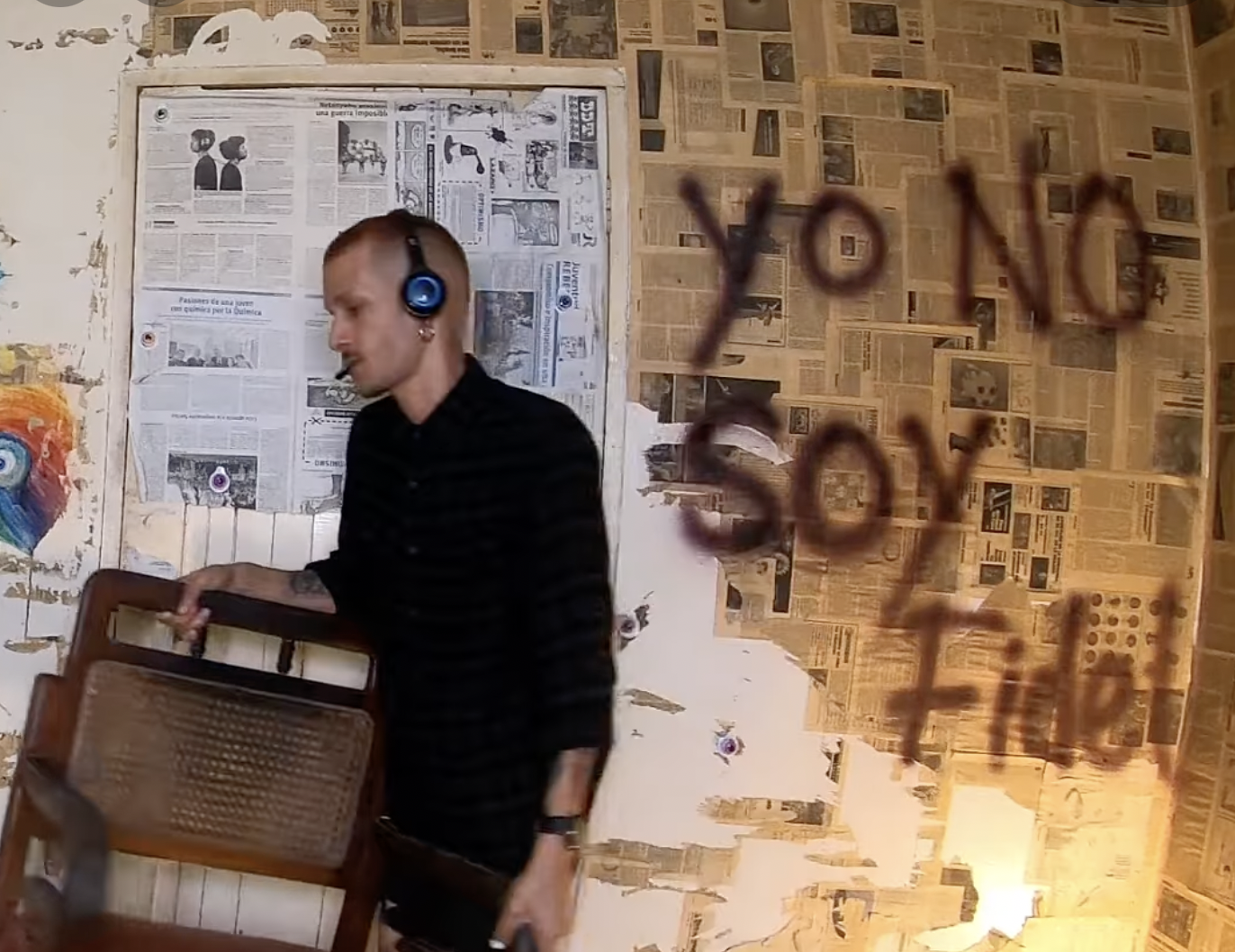
Screenshot from El4tico’s opening video, in which the audiovisual project states that one of its main objectives is to continue along the path of those who stood up for freedom in earlier generations and to “think seriously about how to build a different country, one not based on fear and blackmail.” The words “I Am Not Fidel” appear in the background, directly challenging the official propaganda slogan “I Am Fidel.”
Their weapon was not violence but words and ideas
With remarkably simple resources, using an old, broken Soviet fan and a whiteboard as their distinctive backdrop, the young audiovisual producers created short videos in which they expressed critical views about the Cuban political system. They discussed and sought to debunk what they regarded as myths surrounding the U.S. embargo, while addressing topics such as Venezuela, hunger as a tool of social control, the surveillance of dissidents, communism, corruption, the military conglomerate GAESA, Cuba-Russia relations, autocracy, State Security, and other aspects of the regime, both domestically and in its foreign relations.
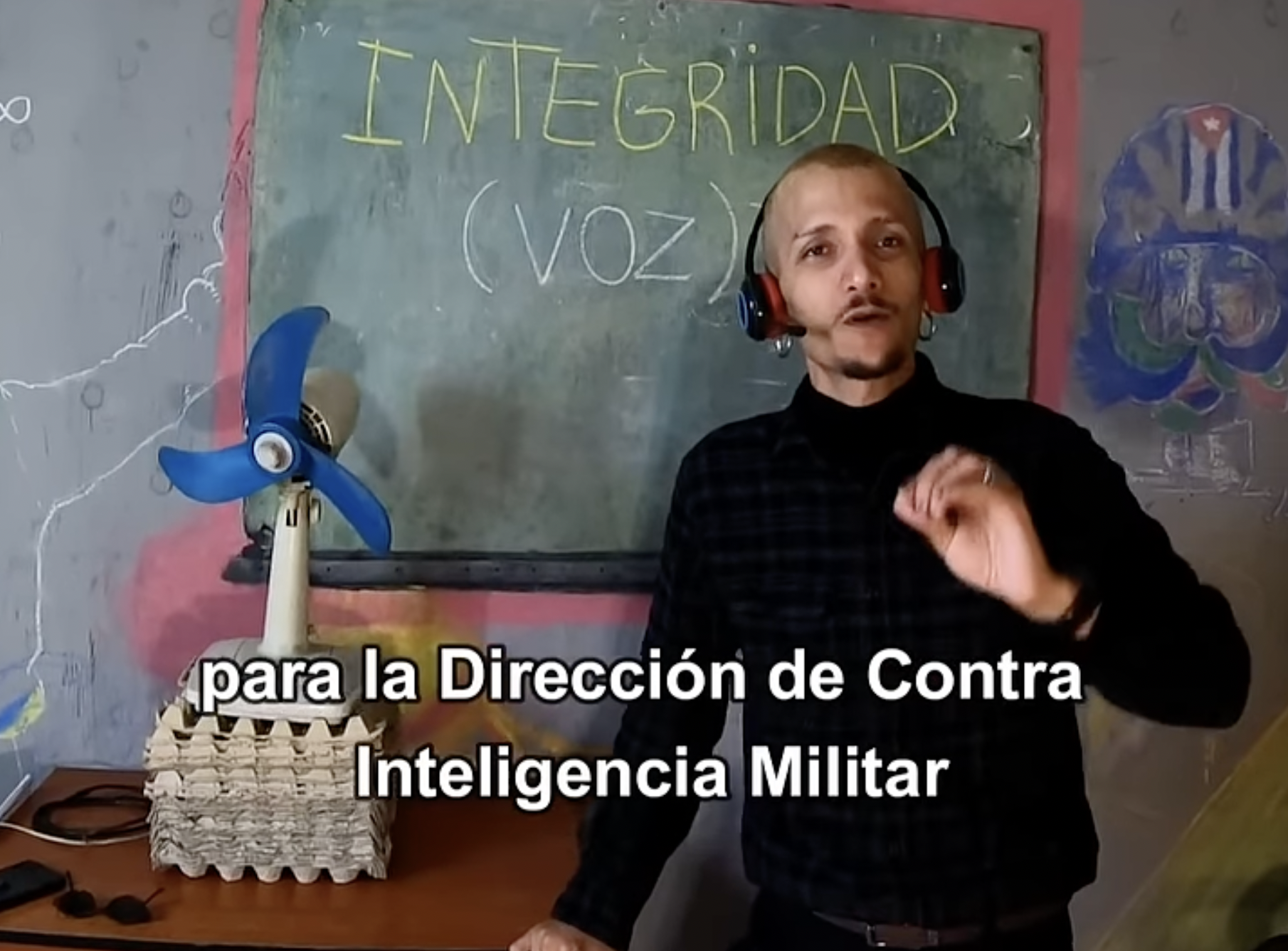
Capture screen of El4tico video: ‘Message to GAESA and Military Counterintelligence”
There was something particularly powerful about the simplicity of the project. In videos lasting only a few minutes, El 4tico presented ideas in an articulate, dynamic and engaging way. It demonstrated how little is required to create an independent space for public discussion: a room, a camera, a whiteboard, creativity and the willingness to speak.
And therein lies the problem of one of the world’s longest lasting dictatorship.
When a government responds to young people expressing critical political opinions on social media with arrests, criminal prosecutions, short-term or long-term imprisonment, house arrest, harassment, forced exile, or other forms of repression, using expressions such as “one-party democracy” or “different democracy” to describe that system risks becoming a form of complicity in disguising the reality of repression.
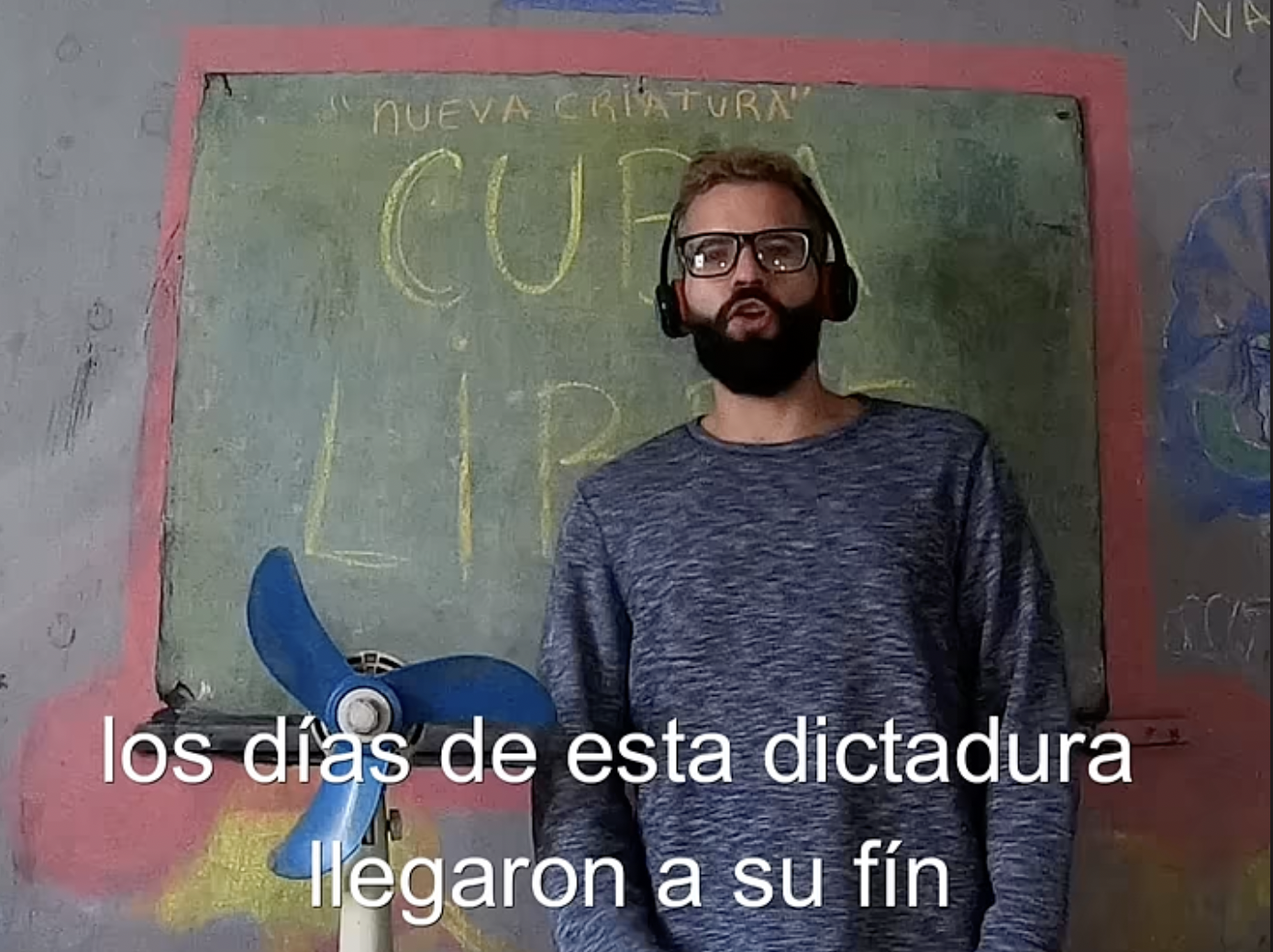
Screenshot from the El4tico video “The Days of This Dictatorship Have Come to an End.” February 3, 2026.
The cases of Ernesto Ricardo Medina and Kamil Zayas Pérez are therefore about much more than two audiovisual producers. They are part of a broad group of young people and Cubans across different generations taking to social media to criticize the political system in Cuba. They raise a fundamental question about the boundaries of permissible thought and expression in Cuba: What happens when young Cubans decide to analyze their own country publicly and reach conclusions that challenge the official narrative?
In the case of El 4tico, the response has been repression and the prospect of years behind bars.
No political vocabulary can transform that reality. Calling a dictatorship a “different democracy” does not make it democratic.
Democratic Spaces condemns the persecution of Ernesto Ricardo Medina and Kamil Zayas Pérez and calls for their immediate release, as well as the immediate release of all Cuban political prisoners and an end to the revolving door of repression sustained through the criminalization of peaceful expression in Cuba.
What Is El4tico?
El4tico describes itself as “a dissident space inside Cuba.”
Created by two young Cubans, Kamil Zayas Pérez and Ernesto Ricardo Medina, El4tico is an independent audiovisual project that uses social media to discuss and critically examine the political, economic and social realities of contemporary Cuba.
Working from a small room in Holguín that was transformed into an improvised studio, Zayas and Medina built an online platform around remarkably simple resources. A whiteboard, a broken Soviet-era fan and a camera became the backdrop for short, direct and often provocative discussions about Cuba.
Their videos have been distributed through Facebook, YouTube and Instagram, among other social media platforms.
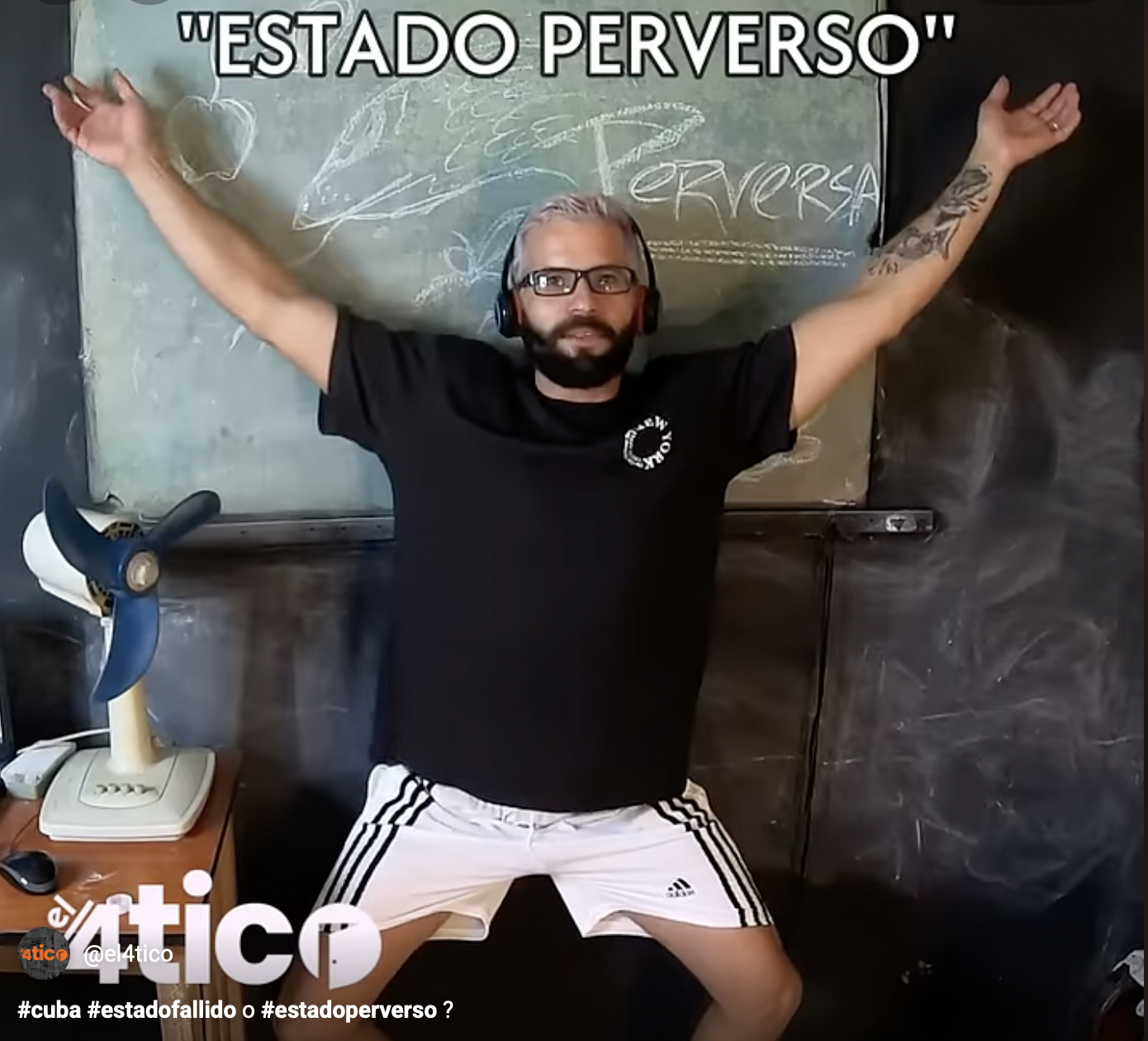
Screenshot from the El4tico video “The Perverse State.”
El4tico emerged in 2024. According to accounts of the project, it was not initially conceived as explicitly political, but its content increasingly turned toward Cuba's political and economic circumstances as the country's crisis deepened.
At its core, El4tico became a space for critical thought, civic discussion and digital dissent from inside Cuba.
The People Behind El4tico
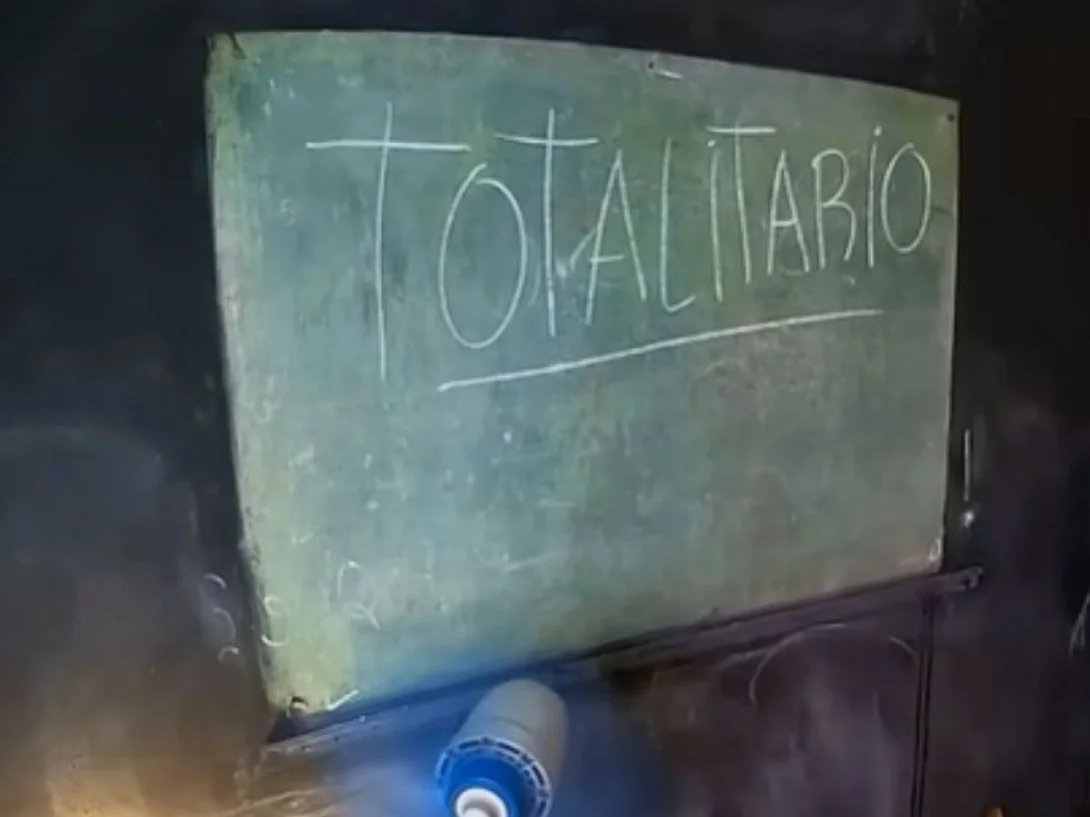
Created with the intention of communicating and educating, the whiteboard is a vital part of the setting of the audiovisual project El4tico. In this case, the whiteboard on the recording set of the independent Cuban project displays the word “Totalitarian.” Photo: Árbol Invertido
The project is principally associated with:
Kamil Zayas Pérez, who has a background connected to the performing arts, and Ernesto Ricardo Medina, a mathematics graduate.
The two have emphasized that they do not answer to a political organization and that their commentary reflects their own ideas, experiences and interpretations of Cuban reality.
Their approach is deliberately accessible. Rather than producing lengthy political programs, academic discussions or lengthy livestream videos, they frequently communicate through short audiovisual pieces designed for social media. Complex subjects such as authoritarianism, state security, political power, economic policy, corruption, civic responsibility and freedom of expression are reduced to direct arguments presented in language intended to engage ordinary Cubans, particularly younger audiences.
What Does El4tico Stand For?
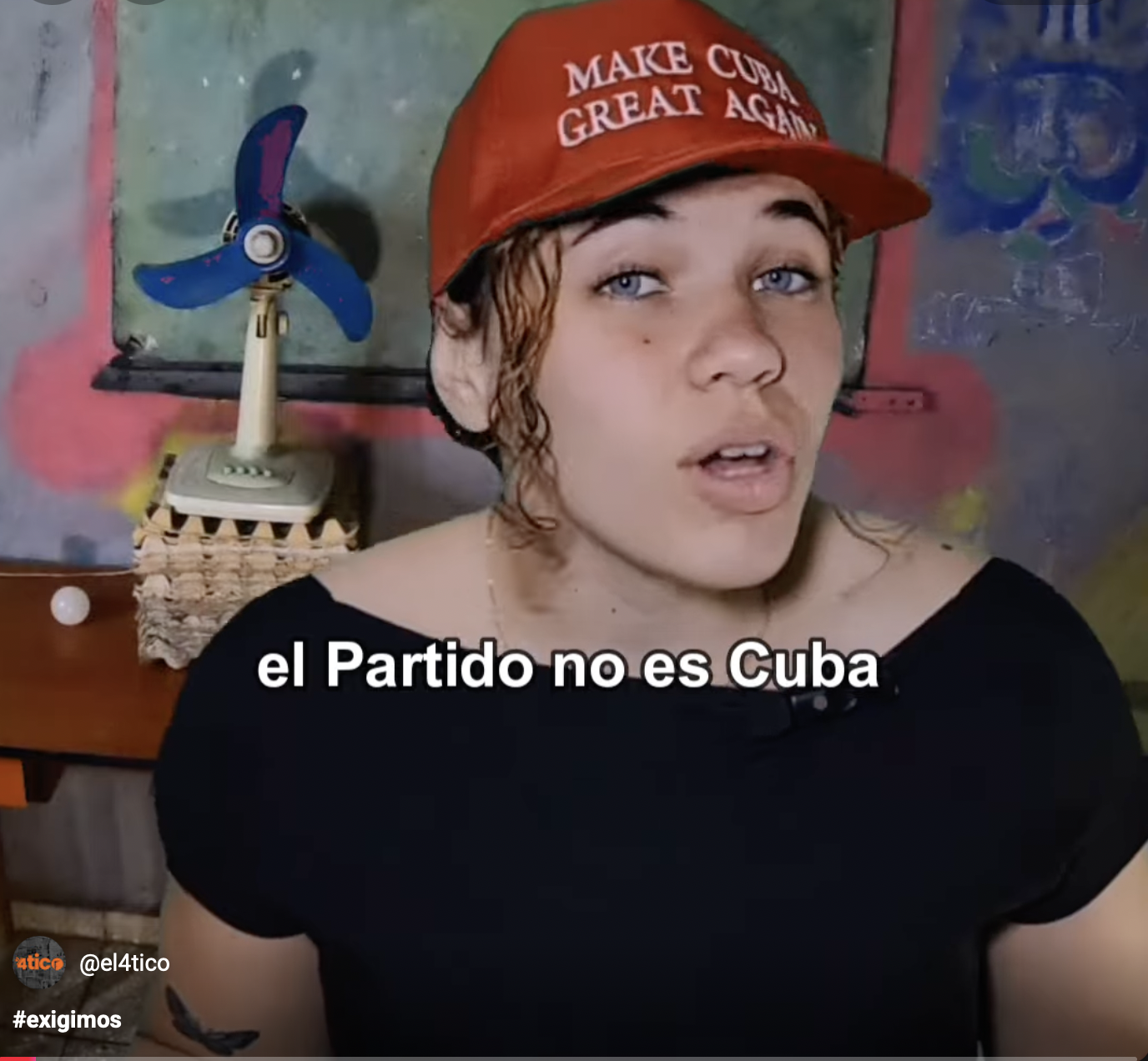
Screenshot from the El4tico video “We Demand.” The text reads, “The Party Is Not Cuba,” a reference to the Communist Party of Cuba, which the Constitution establishes as the country’s sole legal political party.
Although El4tico does not appear to have published a formal manifesto, several recurring objectives emerge clearly from its videos.
The project encourages critical thinking about Cuba's political system, economic crisis and mechanisms of repression. It denounces censorship, restrictions on individual liberties and what its creators regard as the criminalization of dissent.
It also seeks to provide a platform for people who cannot freely express themselves. The creators have described part of their purpose as “lending a voice to those who cannot speak.”
Another recurring theme is civic agency. Their videos encourage Cubans to regard themselves not simply as subjects of political decisions but as citizens capable of participating in the future of their country.
In this sense, El4tico represents an example of how social media can function as an alternative public sphere under an authoritarian political system, allowing independent voices to circumvent traditional state-controlled channels of communication.
Selected El4tico Videos and Messages
Understanding what El4tico actually produced is therefore essential to understanding their ideas and the retaliation they faced from the regime. Overall, their YouTube account has published 37 videos. The following selection of 13 videos from Democratic Spaces provides an overview of some of the key topics Zayas and Medina discussed and the arguments they presented.
1. “Embargo” | January 10, 2026
In this video, El4tico challenges the Cuban government's use of the U.S. embargo as the principal explanation for the country's economic problems.
Its central argument is that “the system does not work.” The presenters contend that Cuba's principal sources of stagnation, poverty and underdevelopment are its economic model and domestic political management, which they argue have failed to modernize.
They criticize a political system that, in their view, responds to dissent at the expense of citizens' freedom and lives.
The video argues that Cuban socialism has failed to demonstrate its viability and that invoking the embargo as the sole explanation for Cuba's problems allows the political system to evade responsibility for its own failures.
2. “Cuba–Russia” | February 5, 2026
One of El4tico's most explicitly political videos draws a comparison between the structures of power in Cuba and Russia.
The video argues that these are not conventional political systems but states in which intelligence and security institutions have accumulated extraordinary power.
Its central formulation is provocative: in Western democracies, intelligence services serve the state; in Cuba and Russia, the intelligence services have effectively become the state.
According to the video's argument, formal presidents and ministries do not necessarily represent the ultimate centres of political power. Real influence lies instead within security structures, intelligence networks, systems of control and access to information.
The presenters also criticize Cuba's historical economic dependence on external allies, from the Soviet Union to Venezuela, while discussing medical-service exports and remittances.
Looking toward political transition, they argue that replacing an individual leader would not be sufficient. In their view, genuine democratic change would also require dismantling the political power exercised through Cuba's State Security apparatus, particularly the G2.
3. “The Days of This Dictatorship Have Come to an End” | February 3, 2026
This video presents El4tico's interpretation of the vulnerability of authoritarian governments.
The presenters argue that when a dictatorship begins releasing political prisoners, it may be an indication that the government is under pressure.
They also contend that aggressive public rhetoric from an authoritarian government can conceal negotiations taking place behind the scenes to ensure its own survival.
The video expresses a controversial view about the prospects for political change in Cuba, suggesting that change may ultimately depend not solely upon the sacrifices of Cubans themselves but also upon intervention or pressure from external actors.
4. “Jesus Is Lord, Not the PCC” | January 28, 2026
This video combines religious language with a broader appeal for individual civic awakening.
It describes a society in which people have gradually been conditioned to accept humiliation, deprivation and political powerlessness as normal.
According to the presenters, Cubans have been taught to respond to their own indignation with humour, resignation and the belief that resistance is futile.
The message challenges that resignation.
El4tico argues that political power depends partly upon people's willingness to accept it and urges viewers to stop pretending that circumstances they regard as intolerable are normal.
Its central message is one of civic awakening: when a population overcomes fear and resignation, even a deeply entrenched political system can be challenged.
5. “We Demand.”
This is among El4tico's clearest statements of its desired political changes.
The video begins from a straightforward premise: “The Party is not Cuba.”
Its creators argue that an entire country cannot remain hostage to a single ideology and that dignity cannot fully exist where only one political opinion, one authorized voice and one official version of truth are permitted.
The video calls for political pluralism and genuine elections, arguing that political power that cannot be questioned or replaced becomes dictatorial.
It also demands an independent justice system, freedom of expression, full recognition of private property, greater government transparency and accountability, and educational reform.
The presenters criticize an educational model that they believe teaches official political mythology rather than encouraging independent civic consciousness.
They also call for acknowledgment and reparation of historical injustices.
The video concludes with a simple declaration: the people demand change.
6. “Veo Veo” (I see, I see)
In one of its most confrontational videos, El4tico rejects romanticized portrayals of the Cuban people's capacity to “resist.”
The presenters criticize foreign left-wing narratives that portray Cuban endurance as a voluntary or heroic commitment to the political system.
They argue that neither the Communist Party nor Cuba's governing elite represents the genuine will of the Cuban people.
The video rejects the suggestion that Cubans are content with economic deprivation and political repression. Instead, its creators describe ordinary people as being forced into survival.
In one of the project's most striking metaphors, Cuba is described as “a concentration camp with a sea view.”
The presenters contend that socialism has functioned not as an end in itself but as an instrument of political control. They challenge those abroad who romanticize Cuban “resistance” to experience prolonged blackouts and material deprivation themselves.
The video's distinction is important: survival should not be confused with political consent.
Its concluding idea is that genuine resistance begins when people decide that they will no longer accept the conditions imposed upon them, even when doing so carries serious personal risks.
7. “What Happened in Venezuela on January 3”
In this video, El4tico turns its attention beyond Cuba to political developments in Venezuela.
Its central principle is national self-determination: the presenters argue that Venezuelans themselves must ultimately decide what political outcome is beneficial for their country.
The video illustrates how El4tico's commentary expanded beyond strictly Cuban affairs to consider broader questions about authoritarianism, political change and sovereignty in Latin America.
8. “Message to GAESA and Military Counterintelligence”
This video addresses GAESA, military counterintelligence and ETECSA, Cuba's telecommunications company.
The presenter alleges that access to his WhatsApp account was compromised and says that he initially suspected ordinary criminals. After learning of similar experiences among government critics, however, he began to suspect that the incident was connected to his political activity.
The video alleges links between ETECSA's telecommunications infrastructure and state surveillance and presents such incidents as evidence of the potential personal cost of publicly criticizing the authorities.
Its concluding message captures much of the philosophy behind El4tico:
“They can take away our WhatsApp, but they cannot steal our voice.”
9. “We Were Raised with the Idea of a Single Leader” | December 21, 2025
This video examines political culture and the recurring expectation that meaningful change requires the appearance of a single charismatic leader.
El4tico argues that Cubans were raised within a political culture built around the image of one powerful leader who supposedly possessed the answers to the country's problems.
The presenters warn that this mentality can reproduce the concentration of power even among people seeking political change.
It also creates vulnerability. When an entire movement depends upon a handful of prominent leaders, the authorities need only monitor, isolate or repress those individuals to weaken collective action.
El4tico proposes a different conception of political change.
Real change does not come from a single saviour. It comes from citizens acting collectively.
Everyone, the video argues, can become an agent of change. Political transformation therefore depends upon Cubans seeing themselves as owners of their country and participants in its future rather than waiting for another dominant leader to emerge.
10. “Hunger as a Tool of Control”
This video presents hunger not simply as an economic problem but as a potential mechanism of social and political control.
El4tico argues that a population preoccupied with obtaining food and meeting its most basic needs has less time, energy and capacity for civic organization.
The presenters contrast the deprivation experienced by ordinary Cubans with the privileges they attribute to senior officials.
They make an especially provocative psychological argument: a political system can become so deeply embedded that those suffering under it may eventually reproduce its explanations and defend the very structures responsible for their circumstances.
In the video's metaphor, the prisoner gradually becomes the jailer of his own prison.
The presenters ultimately ask how long people can continue enduring deprivation without legitimizing those they hold responsible for it.
11. “Illegal”
This video examines the relationship between law, economic survival and political power.
El4tico argues that Cuba's regulatory environment makes ordinary economic life extraordinarily difficult through arbitrary permits, disproportionate taxes, shortages of essential supplies and extensive bureaucracy.
According to the video's argument, when legal avenues become practically impossible to navigate, citizens are pushed outside the formal legal framework simply to survive.
The presenters therefore reverse the conventional question. Instead of asking why citizens violate regulations, they ask what kind of legal system makes routine survival dependent upon circumventing the law.
Their conclusion is that when law ceases to function as a social pact between citizens and government and instead becomes an instrument for controlling citizens, legality itself can become a mechanism of domination.
12. “A Dictatorship Cannot Be Brought Down by Solidarity Alone” | December 11, 2025
This video distinguishes between human solidarity and political strategy.
El4tico describes solidarity as essential for sustaining people during periods of crisis. But its creators argue that solidarity by itself cannot dismantle an authoritarian political structure.
Their reasoning is that dictatorship is maintained through repression, institutional control and organized fear. Confronting those mechanisms, they argue, requires more than sharing resources or expressing sympathy.
It requires civic consciousness, political organization, collective action and sustained strategies of pressure.
One of the video's most memorable formulations summarizes the distinction:
Solidarity is the human glue that keeps resistance alive, but it is not by itself the political instrument that brings down a regime.
Solidarity, they conclude, may not be sufficient, but it remains necessary.
13. “Freedom of Expression”
In this video, El4tico uses irony to address freedom of expression in Cuba.
The presenters describe El4tico as supposedly the “most absurd and perfect proof” that freedom of expression exists in the country because, inside their small room, they speak, criticize and challenge established narratives.
But the irony points toward a larger question: What happens outside that room when critical speech confronts state power?
Conclusion
In sum, El4tico functioned not simply as a physical space but symbolically as an alternative forum for political discussion. To the audiovisual creators’ own definition of the project, Democratic Spaces adds another dimension: El4tico was also part of a broader movement encouraging independent thought. After the arrest of its creators, people inside Cuba and elsewhere began producing similar videos in solidarity, recreating El4tico’s distinctive backdrop with an old Soviet-era fan and a whiteboard. The reproduction of that simple but recognizable setting became a powerful symbol of solidarity and demonstrated how an audiovisual project created in a small room in Holguín had grown beyond its original creators and begun to take the form of a movement.
This embrace of independent thought is particularly significant in a country where critical thinking that challenges the official political narrative has long been discouraged and punished within the educational system, from primary school onward.
The audiovisual project itself is perhaps the clearest expression of what its creators believed El4tico had become. As they declared:
“El4tico is not just a place. It is the real parliament of this country, and it is in permanent session.”
MICHAEL LIMA CUADRA is a researcher and director of Democratic Spaces, a nongovernmental organization dedicated to fostering solidarity in Canada with Cuban human rights defenders and civil society. He is the author of articles on Cuba and authoritarianism published in Latinoamérica21, Diario Las Américas, The Bureau, the Macdonald-Laurier Institute, The Hub, and other platforms. He is co-author of the report Cuba and the Authoritarian Nexus: Internal Repression, External Aggression, and Illiberal Partnerships.